Showing posts with label history. Show all posts

Tuesday, August 06, 2024

SYSTEMIC RACISM

I've written about race in America quite a bit in the last eight or so years because it affects me deeply and personally, like on a soul level. From the above pics, you can see that I live in a very MULTI-RACIAL family. My sister adopted an African-American sibling pair the year before I adopted my first daughter, who is white, and four years before I adopted my second daughter, who is multi-racial. So when Americans started shouting "ALL LIVES MATTER" in 2016 and again in 2020, I had to dissent. ALL lives haven't mattered even though the preamble to our Declaration of Independence signed in August 1776 PRETENDS THEY DO!

I wrote in June 2016 that "the backlash to the Black Lives Matter campaign is rooted in ignorance," and it very much is. Ignorance of history. Ignorance about white privilege and how this country was founded. "ALL MEN" were endowed with "UNALIENABLE RIGHTS." But even as our forefathers penned that, they didn't really believe that ALL LIVES MATTER. In fact, they ruled that African men were 3/5 of a human being, justifying their lower status and white ownership of slaves. The founding fathers believed in Manifest Destiny and that it was bestowed on WHITES by their Creator. Hell, it is believed that George Washington's "wooden" teeth were actually those of slaves...but I digress.

Cartoon I posted in March 2016

I concluded in my June 2016 blog post that, "It wasn't blacks who created the divide amongst humanity. By and large, it was white people. It began with the premise that races OTHER THAN white were somehow inferior. In the case of Africans, they were classified subhuman. The African slave was classified chattel. They were no different than livestock and often treated WORSE! So white people created the US v. THEM culture between themselves and everyone of a "lesser race" (blacks were often referred to as "mud race")."

That STAIN ON AMERICA is what we are still living under the dark shadow of. It is the basis for the systemic racism we see in our Institutions, from governance (at all levels) to housing policies to media disinformation. But even still, in white-controlled America, we still have African-American's towing the line to protect the status quo of racial inequality. Watch this video about Tim Scott, one-time Republican Presidential Candidate, narrated and produced by a black man who compares Scott to a "magical negro" from Hollywood lore.


Not only do "conservative blacks" like Scott distort the narrative, they effectively try to REWRITE it! And our national narrative, as told in history books and propogated by the far right, is ALREADY AS WHITEWASHED as it can possibly be. It's why Republicans vehemently OPPOSE the ideology behind Critical Race Theory and want it banned from any and all curriculum. HOW DARE BLACK PEOPLE TELL THEIR OWN STORY IN THEIR WORDS!!! White America would rather keep them shackled and muzzled. WHAT'S NEW?!?!?!

Tim Scott shucks and jives with the very best of them, selling his version of "the American Dream." Ask most African-Americans what they think about this dream! Just like the preamble to the Declaration, it's HORSE MANURE! It doesn't apply equally. What Scott's story wishes to ignore (dare I say, WHITEWASH) is the struggle his parents and grandparents faced in a country that didn't see them as equal human beings! It ignores the fact of how they even got to this country. MOSTLY BY SLAVE SHIPS ACROSS THE ATLANTIC!!!

Most Black Americans did not immigrate here BY CHOICE, they were dragged here BY FORCE in some of the MOST INHUMANE means possible! And though their blood, sweat and tears built this country, sustained the Southern U.S. Economy until the Civil War, and was spilled on the battlefield (from the U.S. Revolution through the latest conflict in Afghanistan), they were not treated as equals until the civil rights movement some 100 YEARS after Emancipation!

So spare me the false narrative Tim Scott. Even today, you could just as easily be profiled, assaulted and killed as George Floyd!

To that point, I have to worry about my own daughter.

Unless you've had to "have the talk" with your kid, YOU DON'T GET IT!

My daughter has faced micro-aggressions her whole life! She doesn't look any more African than Kamala Harris. But she's a lot more brown and "ethnic-looking" than her white friends. If a group of them is caught smoking weed (a legal drug where she lives) out in a public space, guess who the cops are going to single out! 

You don't think racism still exists in America?? YOU ARE BLIND. Maybe you're just too white and need some black friends, I don't know. But it is a SYSTEMIC problem rooted in our very dark past. It's just a fact.

And if you don't understand white privilege, I invite you to read my post from August 2017. In it, I write how us whites "benefited from the way the system had been rigged for all of history." That was an inherent privilege bestowed on us by "our Creator," I guess. It goes back centuries to Europe and the Roman Empire. It was the basis for the rise of Nazi Germany and wanting to engineer an Aryan society of blond-haried, blue-eyed whites. Nazism was very strong in America in the 1920's at the height of the KKK movement. Look it up. Manifest Destiny all over again.

The bottom line is, YOUR EXPERIENCE is not your neighbor's experience, regardless of the class or race of person he/she is. HOWEVER, the white American experience is VASTLY different than the black experience in this country, and if you'd just take the time to ask or to look into it, you'd see that. JUSTICE FOR ALL doesn't mean for folks on both sides of the tracks and it never has! We see it every day in stories of police brutality and racial profiling.

That's proof of systemic racism. It's built-in. It's always been there, from slave times forward. America is a melting pot and we all give society it's flavor. Without the black experience, told by black voices (not the Token Tim Scotts), we lose some of that flavor that makes us all Americans. I see that when I go to one of our oldest cities, New Orleans. You talk about rich American history, rooted in Europe, Africa and the Caribbean! Jazz music, which started in the Treme', a historically multi-cultural neighborhood in the heart of N'Awlins, is the most American music there is! Cultural diversity is our strenghth, not our weakness, and it should be celebrated.

This isn't my white angst or guilt coming out. I don't hate myself or the race I was born into. I had no say in the matter. Neither did my daughter. But this is deeply personal to me, not just because of her, or my brother-in-law or my many nieces and nephews. I got sick watching the original Alex Haley's Roots in the 1970's as a kid. It was so eye-opening and stomach-turning revelational to me. It changed my perceptions from then on about race and how one was so disgustingly treated. So please don't come at me with your white angst about how your power and circle of control is vanishing. White Americans will be in the minority in another couple of decades. Get used to it!


Tuesday, June 25, 2024

The Smell of Bacon


Just look at this picture. You can smell it, can't you?

There's nothing quite like the smell of bacon. That salty, sizzly goodness, especially fried to a crispy dark brown in an iron skillet, is one of the best smells and flavors around. Maybe it's my pioneer Indiana roots, iron skillets used to cook salt pork over an open fire in the hearth of a log cabin, the abundance of pork, raised in Southwestern Indiana, packed and shipped to far away ports, like New Orleans...

Yep, I have an affinity for bacon, especially thick cut, meaty bacon. The fat has to be brown and crispy. If it's springy and chewy, I gag. I'll eat it cut to any thickness, but I prefer the thicker cuts.

The smell of it frying in the morning immediately takes me back in time.

My dad was a breakfast connoisseur, often getting up early to make it for himself or the fam. Bacon, spam, mush, eggs, potatoes and such were typically on the menu. If you don't know mush, you don't have Appalachian roots (I see ya Kentucky and Southern Indiana!). But the smell of bacon often reminds me of early childhood and dad on the weekends in the kitchen. Mom liked to sleep in.

My Uncle John would be the first adult up on trips to our Sullivan, Indiana, cabin. I'd be sleeping on the cool sheen of Grandma Doyle's old couch in the living room and on the other side of the bar, Uncle John would be banging around in the kitchen. I'd hear the iron skillet come out and soon the sound and smell of bacon! That would rouse me from sleep the quickest. The smell of bacon reminds me of those cool, musty mornings in that old cabin, Dad and Uncle Al asleep on old Army cots on the screened porch, kids sprawled about the floor in sleeping bags, the smell of the smoldering fire pit wafting through the open windows. There was dampness from the swampy land Grandpa Doyle purchased for the family cabin, a low spot on Greenbriar Lake, a spring-fed strip mine pit, abandoned in the late 40's/early 50's.


There were countless mornings at my house, cooking breakfast for my girls, bacon first into the skillet before scrambling eggs or making muffins, toast or biscuits. Thanks to my Dad, I've always been a fan of breakfast. First thing when I get up, the coffee is brewing and I'm getting food out of the fridge. My girls would often wake to that glorious smell. It signifies some of the simplest, yet happiest memories for me of fatherhood. And when we'd go to the family cabin, I'd be the one up early banging around the kitchen, looking for that old skillet. My girls would be asleep on inflatable mattresses just long enough for their short bodies, built-in Disney Princess sleeping bags on top. The couch long gone, along with the interior walls, my ex and I would have just slept through the night on an inflatable mattress of our own. A day of fishing, swimming, exploring and rowing would usually begin with the smell of bacon and that smoldering firepit just outside the cabin. Sometimes, I'd even regnite the coals and cook out there over the open flame.

That brings me full circle to my pioneer roots.

Our cabin, built by Dad's father, was about two counties north of where Mom's family, my pioneer ancestors from the East Coast, settled circa 1811. In those days, rough hewn logs from recently felled trees were notched and placed, like Lincoln Logs, into a rectangular shelter, fireplace at one end for heat and for cooking. I can imagine my 5th great uncles banging around with the iron skillet and setting some salted pork or smoked bacon in to start sizzling to perfection.

That smell, tops among all other food smells (garlic being a close second), is what takes me right back to my childhood, to the cabin, to fatherhood and makes me very happy. The payoff, the thick, crispy breakfast meat, is the end result every time. Paired with a couple of over-medium eggs and skillet potatoes, maybe an English muffin hot and buttered, is one of my favorite meals, so good I'd eat it three times a day!

Friday, July 28, 2023

Beach Elementary: A Unique Firsthand Perspective

 Original post:

https://fmbislander.wordpress.com/2023/07/28/beach-elementary-a-unique-firsthand-perspective/

BY Ellie Bunting (Special to the FMBIslander)

Tomorrow [October 6, 2022] at 6 PM at Skip One Seafood, there will be a meeting to discuss the future of the Beach School. This school has been an integral part of our community since 1937. I attended the Beach School in the late 50’s. My children attended the Beach School in the 90’s. My mother taught at the Beach School for many years. My daughter did her teaching internship at the Beach School. The Beach School is a very special place, and it needs to be available for future generations of beach kids to attend.


Photo courtesy of Ellie Bunting

Over the last 80 years, the number of children who have benefitted from this island school is in the thousands. The school is the heart of the community, and all of the beach kids have fond memories of the years they spent learning the basics and preparing them for a successful transition to the “big school” in town.

Prior to 1937, children on the island were bussed to the Iona School on McGregor.  Thanks to many dedicated mothers, the first beach school opened in the Mayhew Page cottage at 2563 Cottage Street. One teacher oversaw the 27 first, second, and third grade children.  She was paid $80 a month by the school board.  Parents took donations to pay for rental of the cottage, which was still standing before Ian (it is no longer there).  In 1938, a two-room schoolhouse was built on Sterling Street.  Another teacher was added to the school which now housed grades one to six. When the population of the island increased during World War II, a lunchroom was added behind the school which also served as an additional classroom.  In 1943 another teacher was added, and by 1949, the old school closed, and the new school opened on School Street.


This is the second Beach School on Sterling Street (Photo courtesy of Ellie Bunting)

The original building had six classrooms, and a large auditorium with a stage. In 1955 a cafeteria was added as well as an administration office and additional classrooms.

Growing up on the island, the school was a gathering place for families.  I can still remember the names of each teacher I had for the six years I spent at the Beach School.  My mother was the “permanent substitute” at the school for many years, and I was lucky enough to get to know some of these dedicated educators on a personal level.

When my children attended the school in the 1990’s, I realized that little had changed.  The school was still a special place with a hometown feel.  Everyone knew each other and it was like a private school. I was thrilled when my daughter was in Winnie Yordy’s class.  I was in her class when she was a first or second year teacher.  Angie was in her class as she was looking towards retirement.


Photo courtesy of Ellie Bunting

In its heyday, the school housed over 300 students.  The population has decreased since the cost of living on the island has become out of reach for many young parents. However, we should not assume this decline will continue. We have many Beach School alumni who have settled here. They are now becoming parents, and their children need the Beach School as much as their parents did back in the day.

As of this posting [originally posted October 5, 2022, titled “Save Our School”], the future of Beach Elementary remains uncertain. [Editor’s Note: Lee County School District announced earlier this year plans to open November 13th for the return of students to our island school.]

Ellie Bunting is a writer and realtor, working with husband of 39 years Bob and daughter Angie at TriPower. A retired teacher, Ellie serves as President of the Board of Directors for the Estero Island Historic Society. Both she and Bob are avid boaters with extensive knowledge of the wonderful fishing, sailing, and paddle boarding opportunities right in our backyard. Ellie has a book soon to be published on the history of our beloved schooFollow her blog at buntingsbeachblog.com .

Tuesday, August 30, 2022

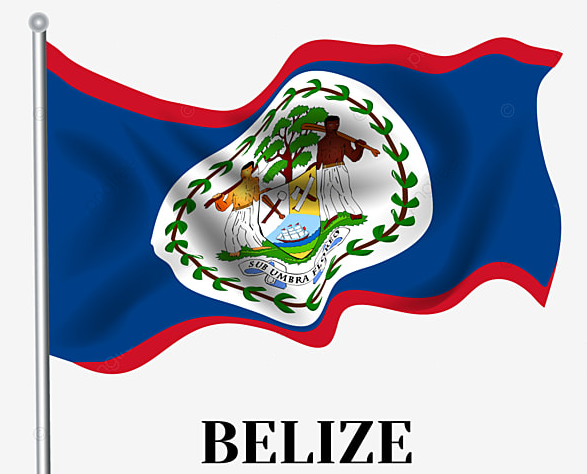
10 Reasons Why I'm Moving to Belize - #5 Culture

"English-speaking and Creole-dominated, Belize has more in common with its Caribbean island neighbors than its bordering Spanish-speaking countries. With a laid-back ambiance of swinging hammocks, large swaths of impenetrable jungle, and an underwater world of twisted corals, neon fish, and gentle manatees, Belize is a tropical treasure." SOURCE--https://www.adventure-life.com/belize/articles/history-and-culture-of-belize

I couldn't have said it better myself. Sub-tropical, laid back, colorful, diverse, Caribbean...are just some of the words I could also use to describe Destination: Belize.


From coast to jungle, there's so much to love about Belize. One piece of their history, dating way back before the common era, is Mayan Culture. I can't wait to go explore the ruins there!


"There was still a large Mayan population in Belize when Cortés arrived in 1519," according to Belize History at this travel site. Then in 1660, the Brits arrived to set up a logging camp. That began Belize's long history of colonization. They only became an independent country on September 21, 1981. That's the day they celebrate their independence. The democratic country is really still in it's infancy and trying to fight it's way out of third world status...tourism is helping.

Yesterday, I wrote about the diversity of their food, and before that the diversity of their people. The diversity of it's topography, history and culture is another draw. I can't wait to discover their music and customs firsthand...to play my djembe on the beach, to dance to the music of the Garifuna people and to immerse myself in the Caribbean vibe.


While there is no theater district in Placencia or local orchestra, there is still an abundance of culture available. Who has funds for an annual membership to the symphony anyway? I'd prefer a symphony of Western African hand drums, anyday!

The beach and the ruins will be my church!

Imagine meditation at this spot--Cahal Pech! The closest thing we have in The States are earthen mounds built by the Mississippian culture within Native America.

I had considered Cuba, as a Caribbean destination, for it's food, music and culture, or the Bahamas for it's laid-back, English-speaking, island vibe...but Belize offers all of that and more. It's the Belizean culture that starts my TOP FIVE reasons for moving south!

Tuesday, July 12, 2022

WM C HASSELBRINK OF FRANCISCO INDIANA FOUND!

 FRANCISCO MAN GOES MISSING FOR 20 YEARS
-------------
Just walks away from shop, farm and family - DISAPPEARS!
-------------
DISCOVERED DEAD SOME 284 MILES FROM HOME

This crazy story happened in the first three decades of the 20th Century in a rural part of Southwest Indiana where I'm from. I have marital connections to this family from Francisco, Indiana. It's such a small farming hamlet, one time hub of commerce on the Wabash & Erie Canal, that I'm related to most of it's early inhabitants.

Well, the Hasselbrinck family is no exception. The spelling with a "c" seems to have come from the old country. William Carl, the subject of this made-for-TV saga, was the child of German immigrants, born in 1856. He grew up on a farm in rural Gibson County, outside Francisco (or Frisco, as locals call it). In his 50's, he put together stock and capital to open a hardware store in town, circa 1909. It had been in business with the aid of his son George William Hasselbrinck, about four years when the owner walked away.

Reasons are sketchy as to why, but on a Thursday, middle of September 1913, with no advanced warning, William simply walked away...from his home, from his store, from the hamlet of Frisco, Indiana. 

24 Sep 1913 Evansville Courier and Journal, p. 19

Apparently, the day was 18 Sep 1913 and the talk about Oakland City and Princeton and surrounding towns was about this mysterious disappearance of a 56-year-old man. The article, above, ran in the nearby Evansville newspapers almost a week later. A few days after that, it was picked up by a paper in Madison (IN) this time with speculation as to why.

27 Sep 1913 Madison Daily Herald, p. 2

All up and down the Ohio Valley, local Indiana papers were picking up the thread, like this one two weeks post-disappearance, and each sheds some new light. The article, below, from Spencer County, says that the subject was last seen cashing a $17 check at a bank in Princeton. Where he was headed was not known. A family and community grasping for answers assumes the man was "slightly deranged."


3 Oct 1913 Rockport Democrat, p. 3

After 40 days, the Evansville papers run a picture of William with his physical details and announcement of a $25 reward offered by his wife. This would translate in today's currency to about $740. Later, we learn that his description and this reward were circulated nationwide.


1 Nov 1913 Evansville Courier and Press, p. 6


Then, in 1914, an apparent break in the missing persons case! The body of a man is found floating in the Ohio River near Evansville. It has been drowned for some time and is decomposed, but folks say it matches William's description. The community is cautiously hopeful. This article ran on the front page of the Princeton Democrat newspaper:


20 May 1914 Princeton Daily Democrat, p. 1

The following day, the Evansville Journal reported on the body found:


21 May 1914 Evansville Journal, p. 5

Even the small town Poseyville News weighed in on the matter some eight days later. Interesting to note, the piece of evidence heretofore unknown. William was last seen aboard an interurban headed towards Evansville. That could have been the route our wayward wonderer took, but who can be sure?


29 May 1914 Poseyville News, p. 4

After the excitement and buzz over potential closure to this case, reality began settling in upon the family. His estate was settled and in Sep 1918, five years after her husband died, the alleged widow went after his life insurance company, as reported on the front page of the Oakland City paper.


20 Sep 1918 Oakland City Journal, p. 1

I'm sure interest died down in the immediate aftermath of the body found near Evansville years earlier. The family gave up hope of ever hearing from him again and doubted they'd learn the details of his passing. It was as if he'd just vanished from the planet. There was no GPS or Internet, surveillance cameras or cable news. In fact, news in 1913 travelled very slowly at times, especially in rural areas like Gibson County, Indiana. It must have seemed like all hope was lost.

Meanwhile, on the opposite end of Illinois, almost 300 miles away, William was farming in the community of Glasford, keeping a journal and speaking of his faraway home. When the connections were made, he was already laid to rest. His family had given up on ever finding him more than 10 years earlier. He'd been gone for almost 20 full years!


The story hit the newswires and this United Press article ran in the 9 May 1933 Indianapolis Times on p. 4. This must have given the family some modicum of closure, even if the why's and how's could never be answered. William Carl Hasselbrink would be brought home and laid to rest. In fact, he was buried in southern Gibson County, southwest of his Francisco home, at St. Paul's Cemetery along State Road 168.

I found all of these articles yesterday in a search for relatives. It took me on a wild ride down some rabbit holes, but I was transfixed and fascinated by the details--that a man would just walk away from his home, his family, his life of more than half a century and move that far away and just start over, too afraid, perhaps, to contact his wife or to go home. This would make for great television drama. Who has the number for Netflix, Hulu or AppleTV?


Friday, September 06, 2019

Sins of the Father: American Hypocrisy

It was our Christian European forebears who first landed on America's shoreline, and the white colonists who followed, that cemented our fate. As the Old Testament says over and again, the sins of the father will be visited upon their children.

The Scripture noted above is followed by three more in Exodus and Numbers, each talking about future generations of family, down to the fourth. We may be well beyond that generation in America. I mean, I've traced my own ancestral roots back to my 6th great grandfather, a Revolutionary War hero from Maine. It's apparent, at least to me, that the sins of his British ancestors, some of them Quakers, are still being visited upon our ilk.

I've been watching the fictional drama on Paramount Network, Yellowstone, featuring producer/lead actor Kevin Costner, which deals not-so-delicately with the tenuous relationship between non-native and Native Americans near his fictional ranch in Montana. Each episode reminds me of the hypocrisy of Manifest Destiny, white privilege and American power. Today, the Biblical-rooted idiom, "sins of the father," kept repeating in my stereophonic brain. And this blog post began formulating therein.

No more succinct indictment of American hypocrisy has been made than this by the Brown Political Review last November:
If the United States wishes to punish human rights violations abroad, it must also come to terms with its own flawed record. To be clear, the United States’ claim to moral authority has never been strong. From the genocidal colonialism of indigenous peoples under the guise of Manifest Destiny to the forced internment of hundreds of thousands of Japanese Americans in World War II, the history of the United States is rife with severe human rights violations (Source: "The Man in the Mirror: Human rights and American hypocrisy," 8 Nov 2018, cached on Google).
The above article goes on to remind us that "the United States withdrew from the United Nations Human Rights Council (UNHRC), joining Iran, Eritrea, and North Korea as the only countries refusing to participate in the council." That's sadly telling.

It's the proof positive, to me anyway, of the snowballing effect of Manifest Destiny. We see it in the current administration's stance on everything from women's rights to the rights of immigrants and foreigners and the LGBTQ+ community. The hypocrisy is that we forget history (doomed to repeat itself), our own heritage, our non-native origins.

A Foreign Policy article, The Heart and Hypocrisy of the American Empire (19 May 2019), describes
"American power" or Pax Americana as "overbearing, lustful, and mendacious." I call it sinful. It sickens and saddens me that this is both our heritage and our legacy.

In Rob Larson's article earlier this year, Capitalist Freedom is a Farce, he quotes American icon Frederick Douglass, who railed against unfettered capitalism, "Experience demonstrates that there may be a slavery of wages only a little less galling and crushing in its effects than chattel slavery, and that this slavery of wages must go down with the other. . ." It led Larson to conclude, "capitalism limits both positive and negative freedom...the dynamics of capitalism generate unbelievable concentrations of private power," tending toward monopolies.

Power tends to corrupt, and absolute power corrupts absolutely.   ~Lord Acton (1887)

That's one way to say it. We are, as a nation, enslaved to the Almighty Dollar. Let us not pretend that we operate under some divine right or that our allegiance to this nation is somehow ordained by Almighty God. That's not the bronze calf at who's altar we worship. Let's be clear about that. Capitalist America is greed-driven. It's power is not god-ordained in anyway, don't be fooled by the inscription upon our currency, "In God We Trust." It might as well read, "In This Almighty Dollar We Trust." Yet, that paper currency isn't worth the pulp it's printed upon.

Yes, our hypocrisy runs deep.

The sins of our father's father's father (well beyond four generations, now) is certainly visited upon us today. This shouldn't be a source of national pride or patriotism. For me, it is a source of great shame.
As the people said in response to Pontius Pilate (Matt. 25:27), "His blood be on us and on our children." We sacrificed human dignity and sanctity upon the cross of Manifest Destiny. It's blood is surely on our hands, America.

Thursday, April 14, 2016

My pioneer family and ties to Lewis & Clark

Today's pioneer history lesson takes us back to 1799 and Gibson County's oldest known settler, Keen Field. I was transported back in time when I first saw his grave, marked with a pioneer-era tombstone, a piece of slate with his name rough-etched into it. He's buried north of Patoka, Indiana, in a cemetery now known as Field-Morrison Cemetery, once maintained by my late Uncle Les Dunning. It sits at the edge of a corn field alongside the railroad tracks and CR 50 E. It is the cemetery where my Morrison ancestors from North Carolina are buried.

It is Rachel E. Morrison (1840-1917), my third great aunt, who ties me to the famous pioneer family. I say famous because Keen Field's wife, Anna Lewis, was kin to Meriwether of the famed Lewis and Clark Expedition. Keen's brothers, Joseph and Reuben Field, were part of Lewis & Clark's Corps of Discovery. Anna (Lewis) Field gave Keen at least 10 children, some born in Kentucky before the move in 1799 to Indiana. Their grandson, Joseph Jackson Field (1831-1864), who died in a sorghum mill accident, was my Aunt Rachel's first husband, married in Gibson County 8 Jan 1863.

The Field and Morrison families were part of what became the Steelman Chapel neighborhood just north of Patoka. That area, first surveyed by the British when it was still part of the Northwest Territory, is laid out in 100-acre tracts running diagonally, SW to NE, known as Military Donations (land that was given to American war veterans in the late 18th and early 19th centuries). The Field family owned Military Donation 10, just south across Steelman Chapel Road, from where the pioneer cemetery mentioned above is located. The Morrisons took up farming just east of there and on the north side of Steelman Chapel Rd, sometime during the last half of the 1850's.

Aunt Rachel was married twice. After her first husband's accident, she married a Henry Barton, whose lineage I have not confirmed, as there were at least 3 Henry Barton's born around that time in Knox and Gibson counties. The headstone where he is buried at Shiloh Cemetery, not far from the original family farm, bears a birth date nine years later than his actual birth--a mistake on the part of the family or the gravestone engraver, I'll never know. I only have record of one child, Nancy Jane Field, being born of Rachel's first union. However, with Henry, she bore at least six children. She died 5 Dec 1917, at age 77, near Patoka and is buried near her parents, David and Jane (Swaim) Morrison, in the same cemetery as Keen Field.

Though not a direct relative, I took much time in researching the Field family from Virginia, who settled at the mouth of the Salt River, just south and west of Louisville, KY. I happened upon Lucie and Gene Field's research some years ago at luciefield.net, where they have painstakingly laid out the family history and retraced the famed steps of Meriwether Lewis and his intrepid group of explorers. It was with great sadness that I did not get to meet Gene and Lucie in person during their trip to SW Indiana in the Summer of 2011. Gene Field left this world two years later, leaving a great legacy to those of us who were connected to his family, either by birth, marriage or friendship.

I've been painstakingly tracing my roots back to the pioneers of Knox and Gibson counties for the better part of 15 years. My mom's lineage goes back to pre-Indiana statehood and pioneers from Maine by the English name, Mills. Since this is the state's bicentennial, admitted to the Union in 1816, I'm near the end of writing a book about that family, showing where we've come in 200 years, it's working title is "My Mills Family: 200 Years in Indiana." Stay tuned for more as I travel along in this quest.

Tuesday, March 29, 2016

Mary Mills-White, My 5th Great Aunt & Pioneer Ancestor


I don't have a photo of her, but then again, she died in 1877, so the headstone will have to do. Mary Mills-White is my 5th great aunt on my mother's side. Her parents, James and Rachael Mills, were pioneers who made the arduous journey from southern Maine to southwestern Indiana in the second decade of the 19th century. They arrived in what was then still wild country full of Indians and every kind of game, settling in the area that would become Princeton, Indiana, before Indiana was admitted to the Union. That would not happen until five years after their arrival in the Indiana wilderness.

Mary was only three when they began their journey, her mother setting up home in New York while her father and uncle ventured westward in search of new farming land. The story has it that the family dog accompanied the men on the journey, returning alone by harvest time back to the temporary farm in New York. Fearing the worst, Rachael Mills, an industrious woman, sold the harvest and made plans to return to their homeland in Kennebec County, Maine. Before she could start the journey back eastward, the way she had traveled with her husband and five young children earlier in the year, the men returned from surveying their future home in Indiana territory. The family then made their way south to Pittsburgh and west down the Ohio River by flatboat until they reached Indiana on New Year's Day 1811, or so the story is told by Berilla Mills-Greek in Gil R. Stormont's "History of Gibson County, Indiana" (1914, Bowen & Co.).

By the time Mary was 18, she had caught the eye of a handsome suitor, Isaac A. White, a young man born in Massachusetts, but reared just across the river in Friendsville (Wabash County), Illinois. He went by his middle name, Anson, and is also mentioned in Stormont's history.  According to Gibson County (IN) marriage records, the two were wed on Christmas Eve 1825. They remained in that county until the late 1830's welcoming at least six of their ten children into the world in Indiana. The other four children were born in Wabash County, Illinois. They remained in that county at least fifteen years before heading westward in 1855. Anson White is counted among the men in Wapello County, Iowa, on that state's 1856 Census. He would die two years later, leaving my Aunt Mary a widow with three children at home--twins Elizabeth and Sarah, 18, and Mary, 15.

On the 1860 U.S. Census, less than two years a widow, Mary is found keeping home in rural Sciola, in the West Nodaway River Valley, halfway between Des Moines, IA, and Omaha, NE. Twenty-four year old son, Samuel W. White, who would not marry for another couple of years, was home tending to the family farm and looking after his mother. He would soon enlist with the 9th Iowa Infantry of Company A, serving eight or nine months before becoming ill and being laid up in Nashville, TN. He returned to Douglas Township, Montgomery County, IA, buying a 100-acre farm nearer to Grant (just north of Sciola, where he lived with his mother before the war). By 1870, Mary had moved in with Samuel and his wife, Sarah Jane, near Grant, Iowa, where she would spend the last seven years of her life, helping to raise four grandchildren, the youngest of which was only 2 1/2 when she died in 1877. Mary joined her husband in a plot they had purchased in the back lot of East Grant Cemetery in Montgomery County, IA. That is where the headstone, above, was photographed in 2010.

Obviously, Mary inherited her pioneering spirit from her parents who made the roughly 1,260-mile trek from Maine to Indiana in 1810-11. She was among Gibson County's earliest families, then helped to shape Wabash Co, IL, and Montgomery Co, IA, living a robust life of 70 years, seeing a son go off to war in the South, only to come home with impaired eyesight due to sickness, to outlive her husband by nearly 20 years (the date on the headstone for her death is off by five years) and to help raise many grandchildren.

This year marks Indiana's Bi-Centennial, so I'll be sharing more about my pioneer ancestors who came to the Hoosier State before it's admission into the Union in 1816.

Monday, November 14, 2011

A Hero Remembered

Grave of Clifford O. Carlton
1924-1991
(Garden Sanctuary Cemetery, Seminole, FL)

On the heels of Veteran's Day Weekend, I thought it appropriate to honor the memory of one of my ancestors. His name is Clifford O. Carlton, of Evansville, who served heroically in the U.S. Air Force/Army during World War II.

I was researching Clifford's family, as I am a 4th cousin,* and ran across these newsclippings in the Browning Genealogy database (http://browning.evcpl.lib.in.us/):

4 Jan 1945 -- "Pfc Clifford O. Carlton was wounded in action in Germany on Dec 16 [1944]. An infantryman, he also has served in England and France since arriving overseas in August, 1944...A former Reitz High School student..."

24 Sep 1945 -- "Pfc Clifford Carlton, brother of Mrs. Heal, is now home on sick leave from Fletcher General Hospital, Cambridge [Ohio]. He is recovering from left leg wounds suffered last Dec. 16 in battle east of Cologne. In the Army since April 3, 1943, he trained at Ft. McClellan, Ala., Ft. Benning, Ga., Ft. Mackall, NC., and Camp Forrest, Tenn. When injured in a parachute accident, he was transferred to the infantry. Going overseas in July, 1944, he served with the 8th Division. His decorations include the Purple Heart, good conduct and American Defense ribbons, a three-star-studded ETO ribbon and combat infantry badge."

Clifford and his wife, Jane, retired to Madeira Beach, Florida. He died 25 Feb 1991 at Bay Vines Veterans Hospital in St. Petersburg. He was laid to rest at Garden Sanctuary Cemetery in nearby Seminole, FL.

* Clifford and I are 4th cousins, 2 times removed, because his second great-grandfather, Bracket Mills, was a brother to my fourth great-grandfather, Duston Mills, of Gibson County, Indiana.

Friday, December 17, 2010

PRINCE TOWN DVD HAS ARRIVED!

Prince Town the DVD is now available! My very first documentary project is in the bag and I couldn't be happier. With over 80-minutes of footage, this DVD features color footage from the '30s, front porch interviews, coverage of the 1965 state basketball championship from WRAY and the IHSAA archives and much more! For those who have ever called Princeton, Indiana, home...this is a must-own DVD!

I spent a good part of the fall down in Princeton, pouring over hours and hours of archival footage, shooting new footage from atop the county courthouse and assimilating it all into this video documentary, based on the research of my Uncle Greg Wright (author of Prince Town and More of Prince Town). Produced in 16:9 widescreen, even the home movies from the 40's and 50's look great. There is the 1955 Fair Centennial Parade, construction of the new Gibson County Bank (1964), pictures and video of the square at Christmastime, footage of the 1992 Heinz plant fire and an extensive look back at the Great Tornado of 1925. Anyone who is interested in a copy of Prince Town the DVD can contact me directly.

Friday, November 12, 2010

PRINCE TOWN DVD


Here is a sample of the documentary film that I am helping my uncle to produce. It features historical images from his book, Prince Town, rare video footage shot as early as 1938 and interviews he conducted with past residents. The finished product will be a captivating peek into Princeton's past.

I hope you enjoy the six-minute preview.

Tuesday, November 02, 2010

Morris Birkbeck's "Notes on a journey in America," 1818

An English gentleman set out from the British Isles to begin his “voluntary exile” in the first half of the year 1817. Journaling along the way, he chronicles his adventures from his voyage to his final destination, though the last page of the book finds him still in Princeton, Indiana.

I found this book through another book I was researching, Early Indiana trails and Surveys (1919), by George R. Wilson. In Wilson’s book, he notes, “For a good pioneer description of Princeton and southwestern Indiana, as of 1817,” see Morris Birkbeck’s Notes on a Journey in America. I’ve become a frequent visitor of the American Libraries’ site, Archive.org, which has volumes of historical books in various digital formats. It was there that I found an online version of Birkbeck’s 1818 work. And it has been a fascinating read, thus far.

The earliest accounts of pioneer life in southwestern Indiana I had discovered previously were written from second- and third-hand accounts after the Civil War. This book is the first eyewitness account I’ve read, and it confirms, in large part, the descriptions of pioneer life from the accounts, like that of Col. William Cockrum, penned decades later.

I have quite enjoyed the perspective of this English gent who praises the qualities of Vincennes’ French residents and looks down in disgust at the filth of many cabin-dwelling pioneers in the countryside. He describes the attitude of the latter as “yawning lassitude.” From what I gather, he considers Princeton somewhere in the middle.

From the outset of the book, Birkbeck explains his reason for the “narrower limits” of his American exploration through only Pennsylvania, Ohio, Indiana and Illinois. “I can forego the well-earned comforts of an English home, [but] it must not be to degrade myself and corrupt my children by the practice of slave-keeping.” The “curse” of slavery—“the bane of society”—he says, has taken “fast hold” of Kentucky and every state south, so he sets a northward course for the untamed wilderness of the Wabash Valley.

He lands at Norfolk, Virgina, 3 May 1817 with the hopes of reaching the Illinois Territory by winter (Note: it would not be entered as a state within the Union until December the following year). Upon reaching Pittsburgh, he foregoes the most common means of travel—down the Ohio River upon a flatboat—for the land-bearing route across Ohio. He finds that horses are rather inexpensive here, since most eastern travelers dismount in favor of the river highway to ports south, namely New Orleans. After purchasing a couple of horses, the Birkbeck party set out for Cincinnati on 4 Jun 1817.

It is not clear the precise date that Birbeck’s traveling party reaches Indiana, as there is a gap in his journal from 23 June – 6 July. By the former, he is writing from Cincinnati and by the latter from Madison, Indiana, about 90 miles downriver. Upon reaching Madison, he writes in his journal,


Indiana is evidently newer than the state of Ohio; and if I mistake not, the character of the settlers is different, and superior to that of the first settlers in Ohio, who were generally very indigent people : those who are now fixing themselves in Indiana, bring with them habits of comfort, and the means of procuring the conveniences of life: I observe this in the construction of their cabins, and the neatness surrounding them, and especially in their well-stocked gardens, so frequent here, and so rare in the state of Ohio, where their earlier and longer settlement would have afforded them better opportunities of making this great provision for domestic comfort. (p.85)

Birkbeck finds from his own personal experience that the stereotypes held in England of the inhabitants of Indiana are quite false. He does not encounter “lawless, semi-barbarous, vagabonds, dangerous to live among.” On the contrary, he finds Hoosiers to be both “kind and gentle to each other, and to strangers.” He also finds across the rolling hills between Cincinnati and Madison several cleared settlements that seem to “multiply daily” interspersed among miles of uncleared timber. His first impression of Indiana and its people is very favorable. He writes that Madison is but five years old at the time of his arrival, which is off by three years, as the town was incorporated in 1809. Still, we get a glimpse into our pioneer past and see the southern portion of our state as it was in its infancy.

Making great headway through the State of Indiana, he comes within a day’s journey of Vincennes by 12 July, stopping at a spot 16 miles east of there, called Hawkins’ Tavern. He speaks of another tavern just 20 miles east of there which sits on the White River, called Stolt’s Tavern. I’m guessing this would have been in the area of present-day Loogootee, Indiana. Most of the land between these two stops, he says, is “unentered, and remains open to the public at two dollars per acre.”

The final destination of the Birkbeck party was eastern Illinois, but for some reason, upon reaching Vincennes, they head south, reaching Princeton by 18 July. For whatever reason he chose the budding town, Morris Birkbeck opines, “Prince Town affords a situation for a temporary abode, more encouraging than any place we have before visited in this neighborhood.” He rents a log home in town with a bountiful garden for nine months at a cost of 20 pounds. This would become his headquarters for the remainder of the book. From here, he would venture out on several explorations of southwestern Indiana and across the Wabash into Illinois Territory.

On one such exploration, he journals from Harmony, Indiana, on 25 July, that he has traveled from there 18 miles south to the banks of the Ohio River, lodging for the night in Mt. Vernon. He speaks of the vast amount of valuable land rich in sand, but it is no match for the prairie land he seeks in Illinois. He calls Mt. Vernon “a very new town,” which by name it was. Settled in 1805, it would be known for the next 11 years as McFadden’s Bluff, renamed in 1816 after President Washington’s home. Upon return from Mt. Vernon to Harmony the next day, Birkbeck finally crosses the Wabash into Illinois and explores the region called the Big Prairie between the Wabash and Little Wabash rivers.

At the beginning of August, 1817, Morris Birkbeck finds his way to the land office in Shawnee Town, Illinois, where he purchases 1,440 acres of prairie and marsh land near the Little Wabash. He describes at great length the land and inhabitants of the Big Prairie with which I will not bore you here. He does return to Harmony, Indiana, a forty mile trek from Shawnee Town, on Sunday night, 3 August. There, he finds the streets empty as everyone is at church. In fact, he has to call the innkeeper out of church to fetch his horses. He comments on the neatness and peaceful appearance of the Harmonites as they pour out of the church, all 700 of them, though he laments their religious superstitions.

By 4 August, he is back in Princeton and pens his next several entries from there, commenting on everything from wild game to the climate. It is for these brief glimpses into the life and times of the Hoosier pioneer that this book is well worth the reader’s investment.

Wednesday, February 03, 2010

Black Hoosier History: Lyles Station


Indiana’s attitude toward slavery wavered generally between acceptance and neutrality, but as a whole, it was never a “slave state.” In fact, several black communities thrived in the Hoosier State during 19th Century, one of which was located just a couple miles west of where I was born. See the partial map of Indiana, below, to locate the thriving black communities of the 19th Century.

Lyles Station is a historic gem in southwest Indiana and a growing tourist attraction in Gibson County. Founded by freed Tennessee slaves, the area once boasted a thriving agricultural community that supported a general store, grain elevator, post office, train depot and a church. The Lyles brothers settled in the rich, fertile soil of the Wabash and Patoka river bottoms, just west of Princeton.

The Lyles Station community boasted several notable residents, including the first African-American postmaster, and sent great men to serve in battle, in Indianapolis’ first black high school and in the White House. No small feat for a rural black community of about 50 families.

The story of this community and others like it is quite fascinating. They dotted the early Indiana forests. Wilma Gibbs of the Indiana Historical Society has done much work to document their existence and keep this important piece of Hoosier history alive.

I call attention to Lyles Station to commemorate and honor Black History Month, not because I want to seem politically correct and culturally sensitive, rather to show my great pride in the neighbors who co-existed peacefully and productively alongside my ancestors in Gibson County. I have no direct anecdotal evidence, but they must surely have interacted on some level.

Thursday, January 29, 2009

My return to The Holocaust

Well before last year's slate of Holocaust-themed movies released just in time for the holidays (you know, mass murder on an epic scale is such cheery, holiday fare...WTF?), I visited the Indianapolis Children's Musuem's The Power of Children: Making A Difference. The section about Anne Frank really moved me. Something about seeing all of the artifacts from Nazi-controlled Europe, like personal diaries, Antisemitic propoganda posters, etc., really gave The Holocaust a new sense of realism and humanity to me, almost like I could touch and feel the evidence for the first time.

Up until then, the worst astrocity of the 20th century had been relegated to some old, black-and-white newsreel footage. And as disturbing as I found many scenes in Schindler's List, it still didn't bring home the reality like seeing the actual relics. I think this launched me on a quest to explore The Holocaust like never before. While I didn't make a trip abroad or even visit a national museum stateside, I did embark on a personal journey back into the 1930's and 40's. I tried to put myself in war-torn, depression-ravaged Europe.

First, I checked-out Schindler's List at my local library, making a mental note to do this at least once a year to keep the horrible reality alive in my mind. Then, I asked my wife to buy The Boy In Striped Pajamas as a Christmas gift (again, nothing quite says "Happy Holidays" like a Holocaust-themed novel). After seeing the movie trailer in November, I thought it best to read the book at home, first. That way, I could release the full-scale of my emotions in the privacy of my own living room and avoid making a fool of myself at the local theater. But I was a bit disappointed in the book. It was the most shallow treatment of The Holocaust I had ever witnessed with an ending I had figured out about 20 pages too soon. I didn't even cry at the anti-climactic end of the story.


It did, however, arouse even further curiosity about the death camps, namely Auschwitz. I went to my library everyday for weeks, gobbling up everything I could on Auschwitz and the Holocaust. I found myself becoming very frustrated with the lack of empathy and effort on the part of the Allied nations to DO SOMETHING about the blatant genocide taking place right under their noses! So I found a book titled Why We Watched and scoured it for answers. It left me just as empty, frustrated and guilt-ridden as I did watching Schindler's for the first time.

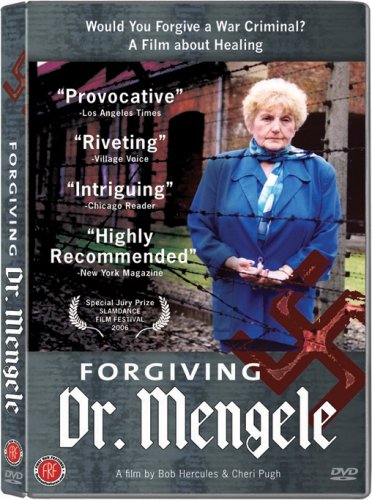
One of the highlights of my library checking spree was a little known documentary, Forgiving Dr. Mengele. It introduced me to Auschwitz and Mengele twin survivor, Eva Kor. And guess what? She lives RIGHT HERE in Indiana! I am going to meet her this Saturday at her Holocaust Museum in Terre Haute where she will be celebrating her 75th birthday! Eva has done her part to "forgive" her Nazi torturers and is part of the larger Forgiveness Project. I can't wait to meet and talk to her!

All this to say, I am still very saddened by the fact that my country did so little to directly help Eva and her coreligionists in Europe during Nazi oppression. It troubles me that author/professor Theodore Hamerow has concluded that rampant Anti-semitism both here and abroad shackeled Allied hands. If that is true, then shame on us...and shame on the rest of the free world!
I will be discussing Hamerow's book in more detail in my next blog...this could turn into a series on The Holocaust. Just so you know, I have much more to say on this topic (Holocaust deniers beware).

Monday, July 21, 2008

Roots

Genealogic research performed by uncles on both sides of my family has piqued my interest in our families’ history. They’ve dug diligently to trace our European ancestry as far back as the 17th century. You can view much of our lineage if you click the Geni link to the right.

My interest in history swings much broader than just my own family tree, however. I’ve recently begun investigating the history of Lyles Station and that settlement’s connection to the Underground Railroad (UGRR) in Indiana. My aim is to establish a solid link between the African-American community in Gibson County and the white abolitionists who aided them, like the Stormont family, and thereby obtain an Indiana Freedom Trails marker as a monument to their efforts.

I guess a combination of these interests caused me to checkout the 30th Anniversary DVD of Roots at the local library. That, and my wife was not allowed to watch it as a child, so this was her first viewing.

I was surprised how little of it I remembered even though it made an indelible impression on me when I first saw it on television in 1977. And while it only gives small glimpses into the UGRR, it continues to stir my curiosity about the secret pathways north and the courage of those who dared to travel it and also those who risked all to aid the escapees.

It stands to reason that free African-Americans in the “lower north,” particularly the settlements in southern Indiana, would have been a first stop along the pathways to freedom. Some escaped slaves would have surely settled there while many others would have continued north to Michigan and Canada.

The problem in documenting all this is that most of the 19th century American history you find in libraries was written by white men. They weren’t particularly interested in elevating the heroes of the African-American community. Their self-serving portraits of abolitionist activity paint an almost white portrait of the UGRR, as if no escape from slavery would have been possible without the aid of anti-slavery whites. While this may be true in part, it is not the whole truth.

Have you ever considered what it would have been like to be a slave on the run and scared for your life? Who would you trust? It certainly wouldn’t be a white man. So my work is definitely cut out for me. This will not be an easy project to document with concrete evidence. Just like my uncles, I will have to dig to uncover the important role the free African-Americans of Lyles Station played in helping others to freedom.

Friday, June 20, 2008

Lyles Station: Jewel of American History

I am opposed to the whole system of slavery, in all its heinous forms, and conscientiously believe it to be a sin against God and a crime against man to chatelize a human being, and reduce God's image to the level of a brute, to be bought and sold in the market as cattle or swine.

- Levi Coffin, Letter to the editor of the Cincinnati Commercial dated May 12, 1860


A few miles from the town of my birth--Princeton, Gibson County, Indiana--lies an almost hidden jewel from our Hoosier past and a priceless piece of American history from the 1800's. It is the unincorporated area of Lyles Station.

Originally known as the "negro colony" west of Princeton, it was comprised of three settlements by free African-Americans, Southerners and former slaves--Sand Hill, Lyles and Roundtree. Sand Hill was on the main road, now State Highway 64, about halfway between the Wabash River and the county seat of Princeton. Lyles was north about a mile, and Roundtree was further north and east on the banks of the Patoka River.

Though I spent many a summer visiting family in the area just to the east of Lyles Station, I had no clue that it even existed. I don't remember my grandparents, aunts or uncles ever speaking of the "colored folks" from the river bottoms west of town. Nonetheless, a thriving agricultural community existed there until the floods of March 1913. In fact, the train that ran just downhill and around my grandparent's home and the hospital where I was born, used to stop at Lyles Station on it's way to Illinois through the 1950's. Still, I had no idea there was a veritable treasure trove of American history just a few miles down the tracks. That is until I learned about it online just a few years ago, thanks to the tireless efforts of Stanley and Mary Madison (Pictured above right, Wayman Chapel AME Church, the oldest building in Lyles Station dating back to 1887).

This week was my first visit to the area called Lyles Station (see picture above). The Madisons and the Lyles Station Historic Preservation Corporation were celebrating Juneteenth and I was able to take my family down for the festivities. Before the trip, I was already committed to volunteering my time to help in any way I could. But afterwards, my resolve to help out is even more concrete. My first goal is to register the site as an official stop along the famed Underground Railroad (UGRR) with Indiana Freedom Trails, Inc.

The western route of the UGRR through Indiana is well-documented. The Wabash River valley through southwestern Indiana provided a means of escape for runaway slaves who were brave enough to cross the Ohio River near Mount Vernon (Posey County) and Evansville (Vanderburgh County) or traverse the meandering Wabash up to East Mount Carmel, then head northwards to Vincennes. Free African-American settlements in Gibson County would provide a common-sense resting place for fugitive slaves escaping north. There are oral traditions that say Thomas Cole, a Sand Hill/Lyles resident, owned many barns with hideouts in the lofts that provided cover by day for many a fugitive. Within walking distance of the Cole residence and uphill towards the banks of the Patoka River sat the home of noted station master David Stormont. Other UGRR stops existed in nearby Princeton, Francisco and Oakland City. Some of these are also well-documented, but the area of Lyles Station is yet listed as an integral part of the railroad.

As my research continues, I'll post more about this exciting project and enlist some of you to help. In the meantime, please visit http://www.lylesstation.org/ to learn more about this jewel of American history.